
We improve lives by empowering people to access, manage, and share their health data.

We partner with governments, private organizations, universities, and other nonprofits to build health technology standards, ecosystems, and infrastructure at global scale, for everyone.

The Problem: Health Data Access Gap

Health data is one of the most valuable assets in a person’s life, yet is one of the hardest to access and use. Records are scattered across providers, payers, pharmacies, labs, devices, and even today, still locked in paper-based systems.

Health data flows are often designed around institutions, not people. This makes it difficult for individuals to access, manage, and share their own information when it matters. The result is preventable harm, wasted spending, and a system that does not work for the people who need it most.

Our Solution: Person Centered Digital Health, Backed by Research

1. Better care starts with a complete patient history

When providers have access to a more complete longitudinal record, research shows they can reduce duplicate testing, avoid unnecessary imaging, lower emergency department and hospital utilization, and make better-informed care decisions.
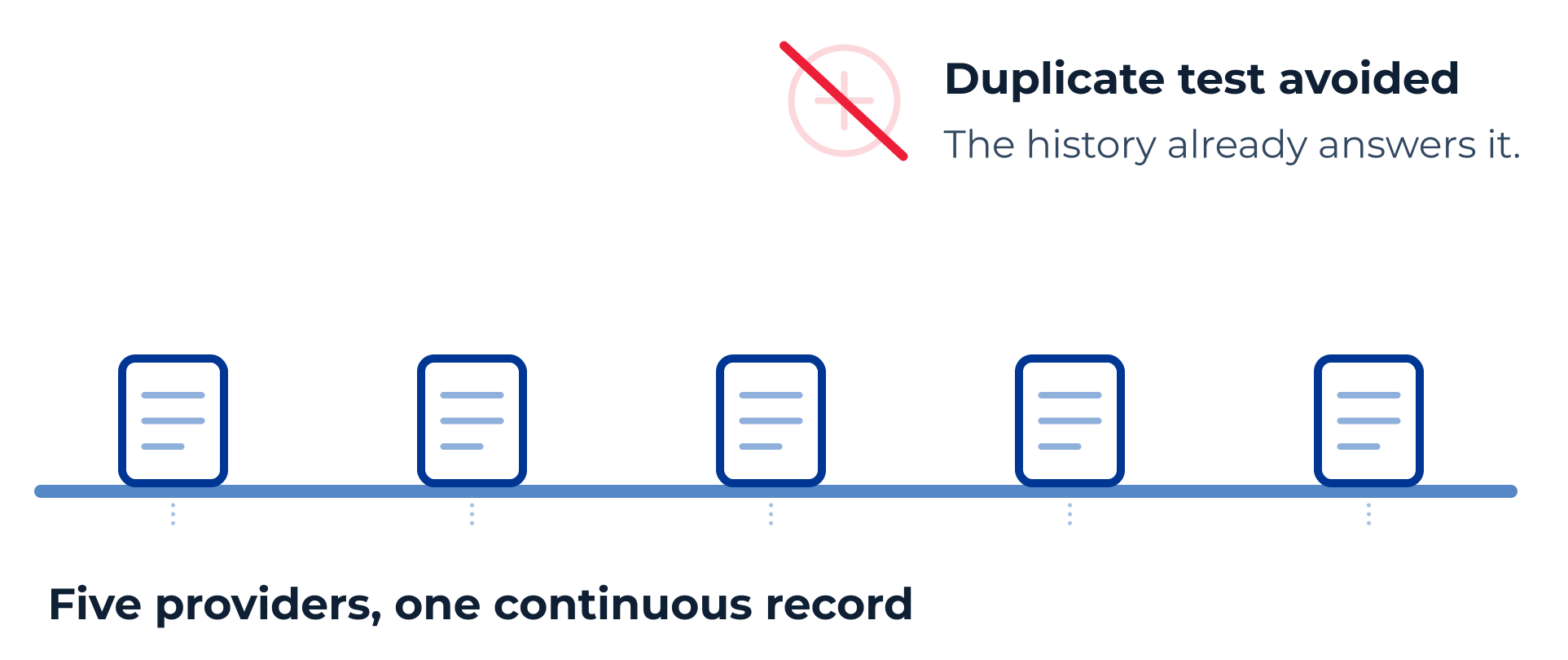
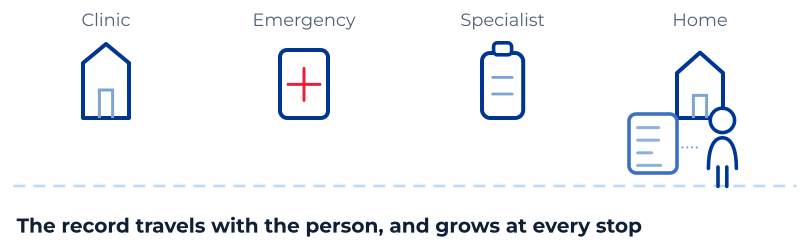
2. Health data should follow the person across every care setting

When patients can access and share their existing health records, they help close information gaps across fragmented care settings. Research suggests that giving people access to their own health information can improve understanding, perceived control, communication, and continuity of care, especially in systems where records do not reliably follow the person.
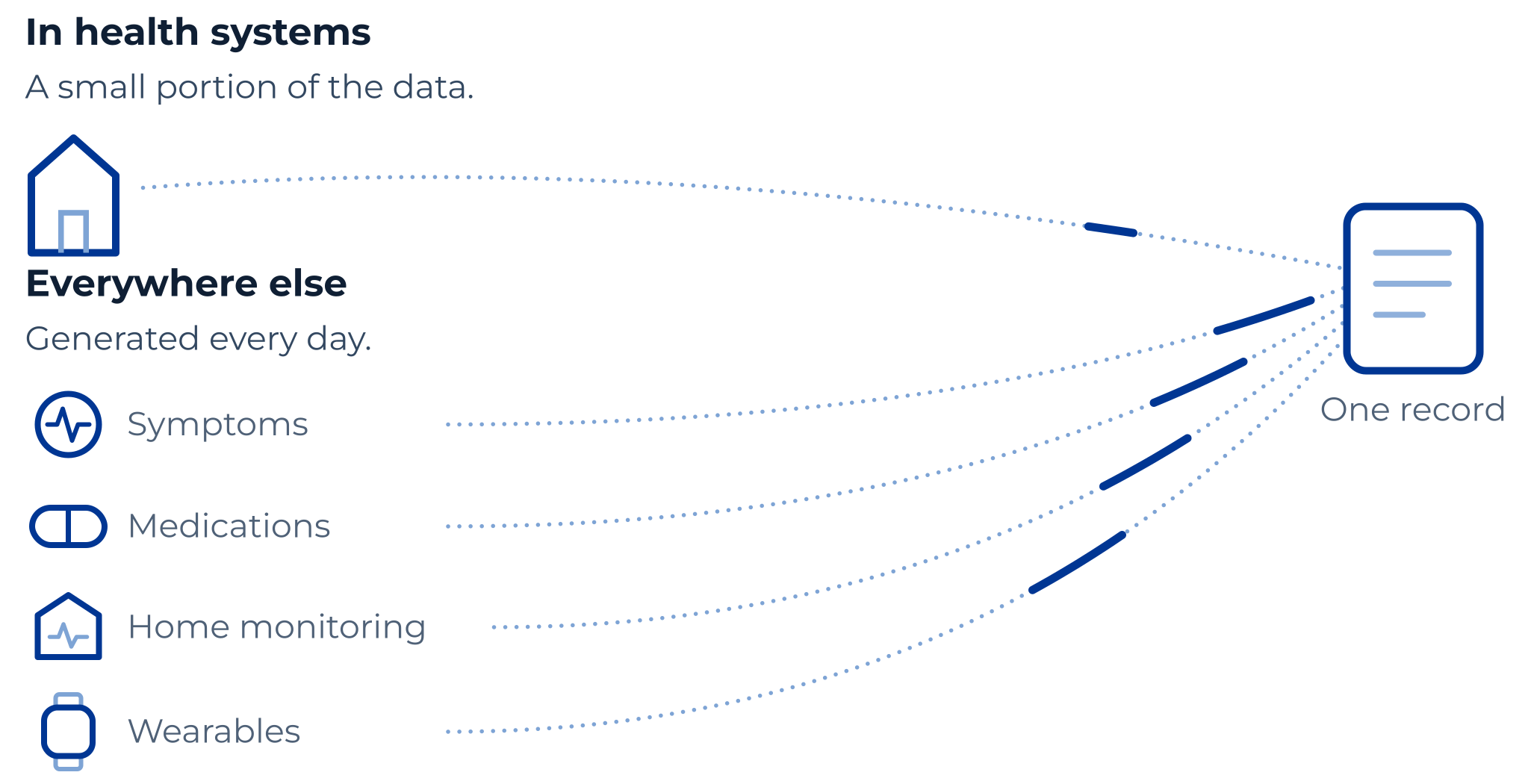
3. Valuable health information is generated beyond the clinic

Health does not only happen inside hospitals and provider offices. Today only a small portion of health data is created within health systems. Patients generate valuable health information every day, through symptoms, medications, home monitoring, wearables, patient-reported outcomes, and other signals.
How we Pursue Our Mission

Develop and Promote Open Standards

We help author and advance standards that enable the flow of health data: HL7, FHIR, SMART Health Cards, SMART Health Links, and the International Patient Summary.
Convene Global Stakeholders

We co-lead, co-found, and participate in multistakeholder coalitions that turn standards into reality: Vaccination Credential Initiative (VCI), the CARIN Alliance, the CommonTrust Network, and the JupyterHealth community.
Build Technology and Services

We build open, privacy-preserving products and services that put real, usable health data in people's hands today.
Strengthen Digital Health Infrastructure

Our standards, technology, and partnerships work together to help public institutions, health systems, and local implementers identify gaps and put the tools, workforce, and enabling conditions in place for person-centered digital health at scale.

Examples: Our Mission in Practice

CommonHealth makes personal health data more accessible
Free, openly available, and built for Android, the operating system used by most smartphone owners worldwide. The app helps people bring health records from across their providers into one place. Their information is stored only on their phone, and The Commons Project cannot access it. People can review and use their records for their own care, with confidence that their health data is shared only when, where, and with whom they choose.
‍
‍SMART Health Card Verifier protects privacy by design
It works offline, requires no account, and verifies credentials directly on the device, so personal health information is never uploaded or shared.

‍JupyterHealth makes advanced health data tools available to everyone
Its permissive BSD license allows any health system, university, researcher, or developer to use, adapt, and build upon the technology without licensing fees. It also enables patient-generated data from wearables, home monitoring tools, and other sources, to be integrated into health records and the analyses clinicians and researchers use to better understand health and inform care.

‍KoraLink invests in the people who make digital health infrastructure work
In Rwanda, the program trains young people, predominantly young women and largely from rural communities, as KoraLink Agents in digital health literacy and entrepreneurship. Through a marketplace that connects training to income, agents expand access to health and digital services while building pathways to further certification, employment, and entrepreneurship.

‍We advance shared infrastructure that allows health data to move and be trusted
We contribute our work through standards organizations and collaborative initiatives including HL7, CARIN, Argonaut, and IEEE, rather than keeping it as proprietary intellectual property. Through the CommonTrust Network, we also provide the trust infrastructure needed to verify health data issuers, so records people carry can be checked and confidently accepted wherever they seek care.

Join us! Help put people at the center of health

Donate to advance our mission
‍
Partner with us on our work